
Osteoporosis is a progressive disease that makes bones weak and easier to break. Many people do not know that they have the condition until a bone breaks, often in the hip, spine, or wrist.
Older age, menopause, family history of osteoporosis or fractures, low body weight (BMI below 20), certain medications like long-term steroids, smoking, and heavy alcohol use can all raise your risk. Routine screening, taking care of your body, and getting the right nutrients can help protect your bones for life.
Who Should Be Screened and Receive Treatment?
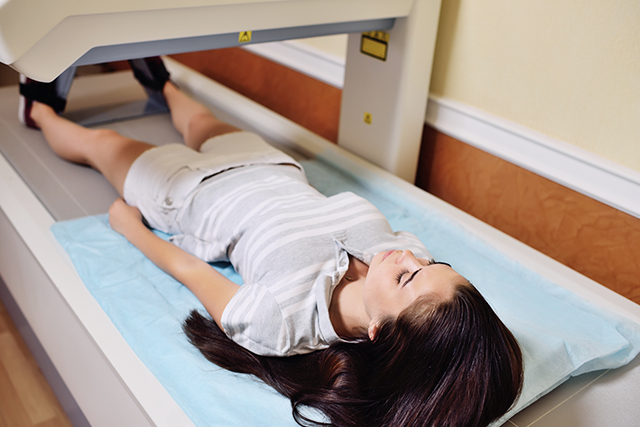
Healthcare providers use a quick, painless test called a DXA or DEXA scan (dual-energy X-ray absorptiometry) to measure bone strength. This is typically a scan of the hip and spine that measures bone mineral density (BMD), which signifies the strength of your bones and your risk of having a fracture. You can learn more about the DXA scan and what your results mean by clicking here.
The U.S. Preventive Services Task Force recommends that all women age 65 and older undergo screening. Postmenopausal women younger than 65 with one or more risk factors should also get a DXA scan. For men, who are at much lower overall risk of osteoporosis, the research is not clear – providers can determine if a screening is necessary on an individual level.
How Clinicians Decide on Treatment
To determine treatment for osteoporosis, your healthcare provider will consider many factors. This includes your DXA scan results (measured as a numeric value called a T-score), previous fractures, and your ten-year fracture risk, which is often estimated with tools like FRAX. Your overall health and preferences also contribute to your treatment plan.
Clinicians may order baseline labs and look for other possible causes of low bone density. This may include blood tests or other screenings to check for things like thyroid issues, low vitamin D, or medications that may affect bone health.
The Foundation of Care: Daily Habits that Protect Bones
Daily healthy habits can protect your bones and reduce your risk of fractures. Adults over 50 should aim for around 1,000-1,200 mg of calcium and 800-1,000 IU of vitamin D every day. Try to get these nutrients from diet first before using supplements. Focus on a balanced diet rich in dairy, fortified foods, dark leafy greens, fruits, vegetables, and lean protein.
Moving your body is beneficial, too. Weight-bearing exercises, which is any exercise where your body is holding up it’s own weight, can help strengthen bones. This includes things like walking, jogging, dancing, or climbing stairs. Muscle-strengthening workouts such as lifting weights or using resistance bands can also be helpful. Exercises like swimming or riding a bicycle don’t count, since the water or bicycle is helping to support your body weight.
For those with osteoporosis who are at risk of fractures, it can be important to prevent falls, which are the most common cause of broken bones. Practice fall prevention by reviewing your medications, getting your vision checked, improving home lighting, removing trip hazards, adding grab bars or railings, and participating in exercises like yoga and tai chi to strengthen legs and improve overall balance.
Lifestyle choices can also make a big difference when it comes to your health. Avoid smoking, limit alcohol use, and eat enough protein and nutritious foods. These changes can benefit your health regardless of age or life stage.
Medications for Osteoporosis: The Big Picture
The medications used to treat osteoporosis fall into two categories: antiresorptives, which slow bone breakdown, and anabolics, which build bone. Examples of antiresorptives include bisphosphonates, denosumab, SERMs, and menopausal hormone therapy (MHT). Anabolic medications may include teriparatide, abaloparatide, and romosozumab, often also followed by an antiresorptive to maintain the bone that has been built.
Antiresorptive Options
Antiresorptive medications slow the breakdown of bone.
Bisphosphonates (alendronate, risedronate, ibandronate, zoledronic acid)
Bisphosphonates are often the front-line treatment for those at high risk for osteoporosis and fractures.
Route: Weekly/monthly pill or quarterly/yearly IV infusion
Benefits: Reduce spine, hip, and other fractures
Common side effects: Upset stomach and abdominal pain if taking pills, flu-like symptoms with IV infusions
Rare risks: Osteonecrosis of the jaw (bone death) and atypical femur (thigh) fracture
Healthcare providers will check a person’s progress after three to five years and may suggest a “drug holiday” — a planned, temporary break from medication – to lower long-term risks.
Denosumab
Route: Twice-yearly injection
Benefits: Similar or greater bone mineral density gains compared to bisphosphonates
Common side effects: Muscle aches, back pain, pain in the arms and legs
Rare risks: Like bisphosphonates, risks include osteonecrosis of the jaw (bone death) and atypical femur (thigh) fracture
Caution: Do not suddenly stop taking this medication. Bone loss can happen quickly. Speak to your healthcare provider about planning a transition to another antiresorptive.
Selective Estrogen Receptor Modulator (SERMs like raloxifene or tamoxifen)
SERMs are sometimes considered when other options aren’t a good choice, and if a person wants to reduce their risk of breast cancer.
Route: Usually pills
Benefits: Helps prevent spine fractures but does not reduce hip fractures
Common side effects: Hot flashes, night sweats, irregular periods or spotting, and vaginal changes
Rare risks: Blood clots, stroke, cancer of the uterus
Menopausal Hormone Therapy (MHT)
MHT is one option for postmenopausal women with vasomotor symptoms like hot flashes and night sweats and high risk of fractures. You may not be a candidate for this medication if you have a history of hormone-sensitive cancer, active liver disease, or unexplained vaginal bleeding.
Route: Pill, patch, gel, or local vaginal product
Benefits: Prevents bone loss and reduces fractures
Common side effects: Headaches, breast tenderness, irregular periods or spotting, nausea, and mood swings
Rare risks: Blood clots, stroke, and, for combined estrogen-progestin medications, breast cancer
Anabolic Options
Anabolic medications help build bone.
Teriparatide and abaloparatide
Route: Daily injections for up to 2 years (done at home)
Benefits: Builds bone mass and strength to reduce fracture risk
Common side effects: Dizziness, headache, joint pain, nausea, irritation at injection site
Rare risks: Allergic reactions, high calcium level, kidney stones, and low blood pressure
Romosozumab
This medication is recommended for postmenopausal women who are extremely high risk. You should generally transition to an antiresorptive after taking this medication.
Route: Monthly injections for 12 months
Benefits: Builds bone mass and strength, reducing fracture risk
Common side effects: Headache, joint pain, muscle spasms, irritation at the injection site, and swelling of the ankles, hands, or feet
Rare risks: Allergic reaction, osteonecrosis of the jaw (bone death), and low calcium level; possible increased risk of heart attack and stroke – this medication is not recommended within one year of these events
Special Situations
Long-term use of steroids (glucocorticoids) can increase a person’s fracture risk. You may need earlier screening and treatment. Focusing on preventive habits like eating well and exercising can help slow bone loss.
Men can get osteoporosis, too. Testing and treatment depend on the individual’s health, risk factors, and screening results. Evidence of screening in men is limited, so talk to your healthcare provider about bone health.
Monitoring Your Progress
Bone mineral density is usually checked every one to three years for high-risk patients or those taking medication. Healthcare providers may order labs to check your calcium and vitamin D levels. Tell your dentist if you take any antiresorptive medications, and report new thigh or groin pain, as it could be an early sign of an atypical femur fracture.
Shared Decisions: Questions to Ask Your Healthcare Provider
When discussing your bone health with a healthcare provider, here are some questions to keep in mind:
- What is my fracture risk, and how was it calculated?
- Which medication fits my risk, preferences, and other health conditions? How long would I take that medication?
- How will we monitor the results and side-effects, including timing for a “bisphosphonate holiday” (medication break)?
- What else can I do at home to reduce falls and protect my bones?
Sources
- National Institute on Aging. “Osteoporosis.” NIA, https://www.nia.nih.gov/health/osteoporosis/osteoporosis.
- U.S. Preventive Services Task Force. “Osteoporosis Screening.” USPSTF, https://www.uspreventiveservicestaskforce.org/uspstf/recommendation/osteoporosis-screening.
- Bone Health & Osteoporosis Foundation. Clinician’s Guide to Prevention and Treatment of Osteoporosis, 2022, https://cdn.reachmd.com/uploads/bhof_%28formerly_nof%29_oi_clinicians_guide_2022.pdf.
- MVP Health Care. “Osteoporosis Clinical Practice Guideline.” https://www.mvphealthcare.com/-/media/project/mvp/healthcare/documents/clinical-guidelines/osteoporosis.pdf?rev=995b4aec1c6d46fca71b99c56697805a&hash=FFBC08F214DF08A5FE3020DBA0440193.
- Centers for Disease Control and Prevention. “Older Adult Falls Prevention.” CDC, https://www.cdc.gov/falls/prevention/index.html.
- International Osteoporosis Foundation. “Treatment.” IOF, https://www.osteoporosis.foundation/health-professionals/treatment.
- Endocrine Society. “Osteoporosis in Postmenopausal Women: Clinical Practice Guideline.” https://www.endocrine.org/clinical-practice-guidelines/osteoporosis-in-postmenopausal-women.
- Mayo Clinic Staff. “Osteoporosis: Diagnosis & Treatment.” Mayo Clinic, https://www.mayoclinic.org/diseases-conditions/osteoporosis/diagnosis-treatment/drc-20351974.
- U.S. Food and Drug Administration. Tymlos (abaloparatide) Injection Label, 2019, https://www.accessdata.fda.gov/drugsatfda_docs/label/2019/761062s000lbl.pdf.
- American College of Rheumatology. “Clinical Practice Guidelines.” ACR, https://rheumatology.org/clinical-practice-guidelines.
- Cleveland Clinic. “Selective Estrogen Receptor Modulators (SERMs): Risks & Benefits.” Cleveland Clinic, https://my.clevelandclinic.org/health/treatments/24732-selective-estrogen-receptor-modulators-serm#risks-benefits.
- Cleveland Clinic. “Teriparatide Injection.” Cleveland Clinic, https://my.clevelandclinic.org/health/drugs/19757-teriparatide-injection.

