
Richer insights. Better outcomes. Powered by wearable health data.
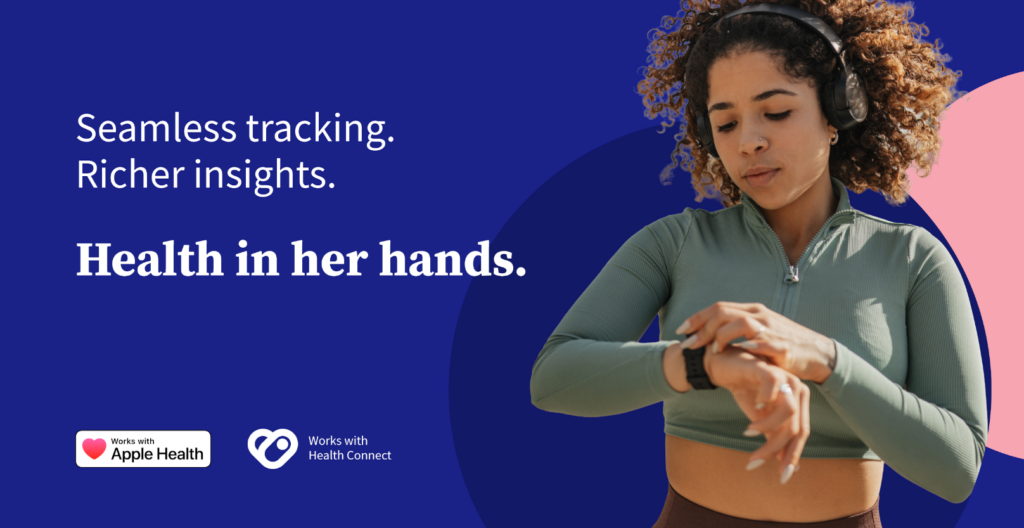
Wearables are increasingly central to the women’s health landscape in 2026. Over one‑third of U.S. women use them to track biometrics and trends.¹,² Meanwhile, the start of a new year is when many people choose to their prioritize health. Up to 79% of New Year’s resolutions focus on fitness, diet, or overall well-being³. The demand for accurate insights is timely.
Ovia syncs with Apple Health and Google Health Connect to incorporate daily health data into personalized guidance, providing our members with richer detail. This holistic view spans every life stage, from fertility and menstrual health to perimenopause and menopause, helping surface potential health issues earlier and encouraging proactive health decisions.
For organizations, this can translate into stronger engagement, lower downstream costs, and better population health outcomes.
Effortless member experience
Ovia’s integrations make it easy for members to connect their wearable data, automatically using key health metrics to create a comprehensive, continuously updated view of wellness.
Members can:
- Track and trend symptoms and health signals across menstrual, fertility, pregnancy, and postpartum stages
- Monitor menopause-related vasomotor symptoms, including hot flashes, migraines, dry skin, and hair changes
- Receive real-time, clinically relevant details that reflect changes in health patterns including sleep and daily activity levels
- Access more personalized support from the Ovia Care Team, informed by accurate, up-to-date health data
This always-on data flow supports sustained engagement over time, enabling members to move beyond one-time awareness toward ongoing participation that reflects real-world behaviors and evolving health needs.
Simple, strategically valuable
By meeting women where they are through the devices they already rely on, Ovia converts health data into meaningful action. This can lead to earlier identification of health conditions, stronger participation in preventive care, and measurable gains in outcomes and program effectiveness. In a crowded femtech landscape, Ovia delivers clear differentiation and value.
References
- Journal of Medical Internet Research. Usage Trends and Data Sharing Practices of Healthcare Wearable Devices Among US Adults: Cross‑Sectional Study. Found that wearable use among U.S. adults increased to about 36% in 2022, reflecting growing adoption for health tracking.
- Fitness Tracker Statistics and Facts (Market.us). Report data showing that women had slightly higher wearable usage (35%) than men in the U.S., indicating widespread wearable engagement across genders.
- Drive Research. New Year’s Resolutions Statistics and Trends. Survey results showing that about 79% of New Year’s goals involve improving health (including fitness, diet, or overall wellness).