
Beyond bone health: Strengthening lifelong wellness
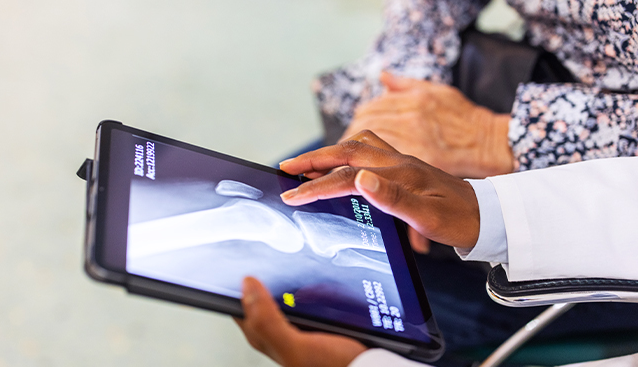
Bone health is essential for mobility, strength, and independence. Yet women are disproportionately affected by osteoporosis and related complications.¹ Bone loss can develop gradually and often goes unnoticed until a fracture occurs. It’s not just a concern for older women, risk accumulates across the lifespan.
Early awareness and proactive care can help reduce risks. That’s why Ovia Health by Labcorp expanded its general women’s health programming to include a dedicated section on Bone Health—part of our holistic approach that integrates preventive health at every stage of a woman’s journey.
Our new content promotes health literacy. By understanding how menstrual cycles, hormonal changes, and lifestyle choices affect bone health, women can take action years before problems arise.
We equip members with evidence-based guidance across key areas, including:
- Bone health primer – Learn how bones function and change over time and the hormones and nutrients that support them
- Bone health at different life stages prior to adulthood – Childhood, adolescence, and young adulthood
- Bone health and menstruation – Discover how menstrual cycles and hormone fluctuations influence bone density
- Hormonal birth control & MHT – Learn how contraceptives and menopausal hormone therapy may impact bone health
- Osteopenia & osteoporosis – Clear insights into these conditions, including prevention and management strategies
- Prevention and risk factors – Explore the role of family and health history (including pregnancy and breastfeeding), vitamin D and calcium, exercise, and lifestyle habits like smoking and alcohol use
- Screening recommendations – Know when and how to screen for bone health concerns to detect issues early
- DEXA scan demystified – Everything you need to know about this key diagnostic tool
By embedding bone health within a comprehensive, life-stage approach, Ovia Health by Labcorp helps women to take control earlier—strengthening not just bones, but long-term health trajectories.
Women’s health shouldn’t be episodic; it should be proactive, continuous, and lifelong.